Desiree

Email Marketing for Beginners: List Building, Segments, and First Campaign

Why email marketing? 

Email marketing is one of the best tools any small business has at its disposal. It’s cheap. It works. Plus, most people check their inbox several times every single day. They’re giving you the opportunity right there! 

But what about the rewards? 

The average return on email marketing is $36 for every dollar you spend. You can’t do those numbers with most other channels.

So I hope this got your attention? Now let’s dive in. 

What Is Email Marketing?

Email marketing is just what it sounds like: you email your customers. Send them deals, updates, helpful tips, or new products. Keep your subscribers engaged and interested in your business.

Email marketing is about relationship building. Not sending your customers 50 text ads all at once. And so slow and steady growth is your goal. 

How to Build Your Email List

Your email list is the foundation of your email marketing campaign. Make sure you grow your list the right way from day one.

Buy an email list? Nope. Do not do this. 

These lists are filled with people who didn’t volunteer their information. They aren’t interested in what you have to say and will quickly mark you as spam. Sorting out the mess you’ve created will hurt your chances of reaching paying customers.

Instead, you can grow your email list by:

  • Adding a sign-up form to your homepage 
  • Offering a free lead magnet in exchange for an email address
  • Posting about your newsletter on social media 
  • Asking your current customers to join your mailing list

A lead magnet is a gift you give your subscribers in exchange for their email address. It is simple and beautiful. 

Ideas for lead magnets include quick how-to guides, recipe cards, discount coupons, or short video tutorials. If it’s something your subscribers will find valuable, they’ll give you their email address. Promise. 

Segment Your Subscribers

Segment Your Subscribers

You’ve worked hard to build your list; now keep it growing by segmenting your subscribers.

Sending the same blast to everyone you know is a little… awkward. Imagine texting your mom, your boss, and your college boyfriend the same message.

It just doesn’t work. 

Subscriber segmentation means splitting your list into smaller groups. You can group people by:

  • Where they live
  • What they bought before
  • How often do they open your emails
  • What topics do they care about most

When you send the right message to the right group, more people open it. More people click. Your campaign does better without a ton of extra effort.

Know Your Email Types

email types

Not every email has the same job. Here are the main types worth knowing:

  • Welcome emails greet new subscribers right away
  • Newsletters share regular updates, tips, or brand stories
  • Promotional emails push a sale, offer, or limited deal
  • Re-engagement emails go to people who stopped opening your messages

For your first email campaign, start with a welcome email. It sets the tone for your whole brand. It tells people what to expect. And it’s one of the most-opened email types you’ll ever send.

Plan and Launch Your First Campaign

First Email Campaign

Your first campaign doesn’t need to be complicated. Pick one clear goal. Write one focused message. Add one call to action.

Here’s a quick checklist before you hit send:

  • Know who you’re writing to
  • Write a subject line that grabs attention
  • Keep the email body short and easy to read
  • Add one clear button or link for people to click
  • Send a test email to yourself first

Always check how your email looks on a phone. Most people read emails on mobile, so a broken layout on a small screen means you’ve already lost half your audience before they even read a word.

Track What Happens After You Send

After you send, look at your results. Open rates tell you if your subject line did its job. Click rates show if your content hit the mark. Unsubscribe rates flag when something went wrong.

Don’t stress if your first campaign falls flat. Every email teaches you something new. You adjust, try again, and get better each time.

Start Today

Email marketing for small business owners costs very little and pays back a lot. Build your list. Break it into smart segments. Launch your first campaign. The sooner you start, the sooner the results come in.

How to Create a Lead Magnet That Converts (Examples + Templates)

lead magnet

Have you ever noticed how some businesses build massive email lists almost overnight? Their secret is creating lead magnets people actually want. A lead magnet is simply a free item or service you give away in exchange for an email address. But not all lead magnets are created equal. The good ones convert like crazy, and the bad ones collect digital dust.

What Makes a Lead Magnet Worth Downloading?

Great lead magnets solve real problems fast. They give quick wins and instant value. Nobody wants to wade through 50 pages to find one useful tip. The best lead magnets feel like getting $100 worth of help for free.

Your lead magnet should also match what your audience truly needs. It needs to be easy to consume, very helpful, and relevant to what you sell.

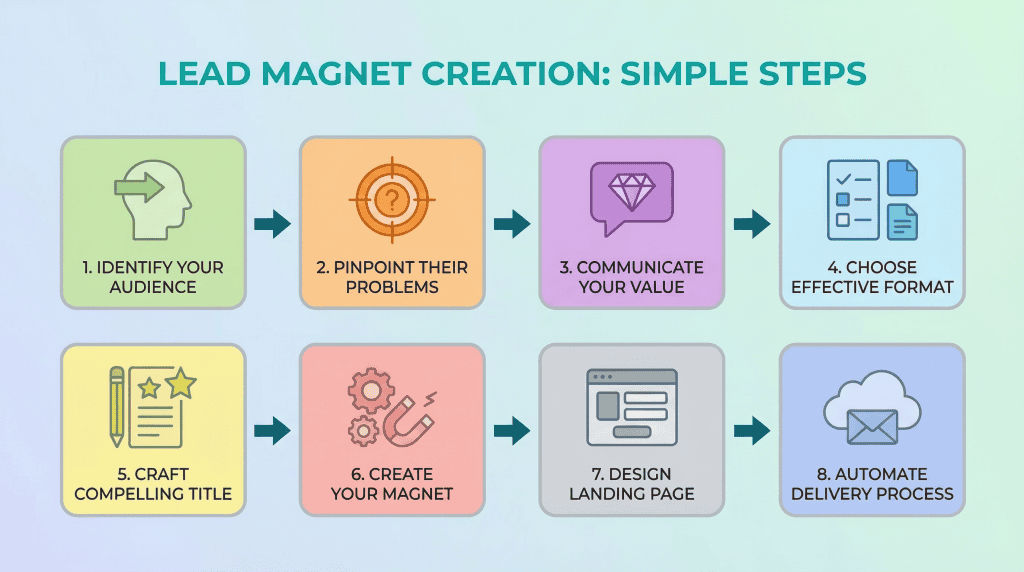
How to Build a Lead Magnet Step by Step

How to Build a Lead Magnet Step by Step

1. Know Who You’re Talking To

You need to get clear about who your customer is. To achieve this, check your social media stats or website analytics to see who already visits your site. And this will help you create a simple profile of who you want to attract. This step saves you from creating products or services nobody cares about.

2. Find Their Biggest Headaches

Please also put yourself in your audience’s shoes. Please check what the most common problems or questions they usually have. Social media groups or forums can help you achieve that. The best lead magnets are those that solve a specific problem.

3. Make Your Value Crystal Clear

People need to know exactly why they should download your free gift. How will it help them? What makes it better than other free stuff? And so you need to be very clear about what they’ll get and how it will make their lives easier.

4. Pick the Right Format

Some formats convert better than others:

  • Cheat sheets (34% conversion rate)
  • Checklists (27% conversion rate)
  • Ebooks (24% conversion rate)
  • Quizzes
  • Templates
  • Calculators or tools
  • Resource lists

Choose the format that best delivers your solution.

5. Craft an Attention-Grabbing Title

Your title must stop people from scrolling. You can try these proven formats:

  • “How to…” (How to Build a Website in 3 Hours)
  • “The Complete Guide to…” (The Complete Guide to Email Marketing)
  • Questions (Why Is Your Facebook Reach Dropping?)
  • Lists (10 Ways to Slash Your Tax Bill)

6. Create Your Lead Magnet

Look at similar content in your field for ideas. Outline what you’ll include. Write a first draft. Ask someone else to review it. Use Canva for simple designs if you’re not artistic.

7. Build a Simple Landing Page

Create a page that shows off your lead magnet. Include:

  • A compelling headline
  • A picture of what they’ll get
  • Bullet points on the benefits
  • A short form (just email and maybe first name)

8. Set Up Automatic Delivery

After you finish the setup, you can connect your form to an email tool like MailChimp or AWeber. This link lets you send your lead magnet without having to do it by hand each time. Next, write a simple email that delivers the file right after someone signs up.

Lead Magnets That Actually Worked

Real businesses get real results with lead magnets:

  • A social media planner who collected 3,600 email addresses
  • A top ten list that helped generate $27,000 in sales
  • A homesteading guide with a 35% conversion rate

An Introduction to Email Marketing

email marketing

No matter if you’re just starting out on your business journey or if you’re a veteran at it, there’s always a need for more and more innovative marketing strategies, and email marketing is one of them. This type of marketing has been around for a while now, but there’s a lot that has changed since it first began.

In this article, we’ll dive right into what email marketing is all about, how you can use it to enhance your market reach, and how it can help boost your business.

What is email marketing?

First things first, let’s break down what email marketing is all about and how you can make the best use out of it. In short, email marketing is a channel to market your company, brand, or business to your target audience. 

But unlike traditional advertisements, which are usually generalized and aimed at a larger audience, email marketing specifically caters to each individual client/ customer. 

Not only that, but through the use of email marketing, you can also get in touch with new customers or connect with your potential clients. This marketing strategy helps brands advertise their products and services and helps make customers aware of new product or service launches and the perks they can gain from them.

Since this is a very direct form of marketing, it is more likely to achieve a higher success rate in building customer relationships and brand awareness.

Types of Email Marketing

There are many types of emails you can create and send to your customers, but one thing common to all is the CTA (Call to Action). After you have determined the type of campaign you’ll run for your business, make sure to include a CTA at the end of every email so your customers are more motivated to engage and take action. 

Here are some of the most common types of emails that are used by businesses for their email marketing campaigns:

  • Welcome emails
  • Promotional emails
  • Invite emails
  • Lead nurturing emails
  • Confirmation emails
  • Newsletter emails
  • Dedicated emails
  • Seasonal marketing emails
  • Survey email

How to effectively use email marketing for your business

Here are 7steps you can follow in order to use email marketing to your advantage:

Create a strategy

Like anything in life, you absolutely do not want to dive into email marketing without a target or plan. Even though the concept seems pretty simple, it only works if you have a tried-and-tested strategy that will help you achieve all your targets and goals.

When you create your email marketing strategy, keep these three questions in mind:

  • Who is your target audience?
  • What is the message you want to relay?
  • What is the goal of sending these messages to your customers?

Choose a reliable email marketing service provider

In a world of technology, there’s almost nothing that you cannot find online, and that includes email marketing service providers. Now you don’t even have to spend precious time planning and worrying about your email strategy. You can work with reliable email marketing platforms that are professionals who can help you reach your goals.

Instead of deciding which email to send to whom, you can leave it to the experts who can streamline your campaign and handle all the groundwork for you. There are a host of online marketing experts on sites like Freelancer and Upwork that can be hired for various online marketing services, including email marketing. You will find experts at different price points with education from top tech schools and varied professional experience.

But before you choose a platform, make sure they understand your brand and the message you want to communicate to your audience.

You can always do this yourself, but there are added benefits to choosing professionals, as they can help make your emails look more professional and ensure your campaign follows a straightforward route to your end goal.

Create an email marketing list

Now that you have a plan and professionals to help you carry it out, you need your customers’ email addresses. An email marketing strategy is only as good as your email list. 

Please ask your customers for their email addresses so you can contact them about offers, promotions, and other information. 

Here are some ways you can achieve this:

  • If you have a physical store, keep a signup sheet near the billing counter so you can ask customers to leave their contact information.
  • Open a social media account and ask your followers to sign up/ subscribe to your email list
  • If you have a website, add a pop-up plugin so your customers can sign up with their email.

Personalize your emails

With so many businesses dedicating their blood, sweat, and tears to gain customers, it is only natural that many of your customers, whether loyal or not, might skim your email or skip it entirely. To break through this hurdle, personalize the emails you send them. 

For example, you can tailor your emails to your customers’ needs by using the information they have provided, such as location, purchase history, or their interests, to send them emails with content that is similar.

Curate an attractive welcome email

The welcome message you send to your first-time subscribers is your first impression. This is your moment to wow them and entice them to come back for more by making your welcome email as attractive as possible. Strike when the iron is hot!

Test before you commit

Email marketing is relatively less expensive in comparison to other marketing strategies, so it doesn’t cost you much to try out different versions of emails before you commit to one template. Try a few different versions, see which gets the most engagement, and stick with those.

Track your results

Email marketing does not end with you pressing the send button. Please continue tracking your progress and analyzing your campaign’s results. A campaign is only successful if you are constantly monitoring your activities, such as click-through rates, open rates, and unsubscribe rates.

See what works and what doesn’t, and use your new knowledge to streamline your emails for a better customer experience.

Tips to increase the success rate of your email marketing campaigns

  • Hold back on spamming the inbox. Even if you have a textbook, foolproof strategy, it’s never a good idea to spam your customers with irrelevant emails. This can make them lose trust in your brand and might lead them to unsubscribe from your emails.
  • Refrain from buying email lists. There are strict protocols and policies for accessing email addresses, so aim for organic growth instead.
  • Please be well-versed in national and international email regulations to avoid legal trouble.